

Climate risks, pressure on natural resources, supply chain disruptions, and emerging regulatory requirements have created a complex and rapidly evolving landscape for sustainable construction, one that affects operational continuity, costs, timelines, reputation, and the competitiveness of organizations. In this context, understanding how the most relevant risks, opportunities, and impacts affect the sector, and translating this knowledge into concrete tools for decision-making, business management, and access to sustainable finance, becomes essential to safeguard business permanence and resilience.
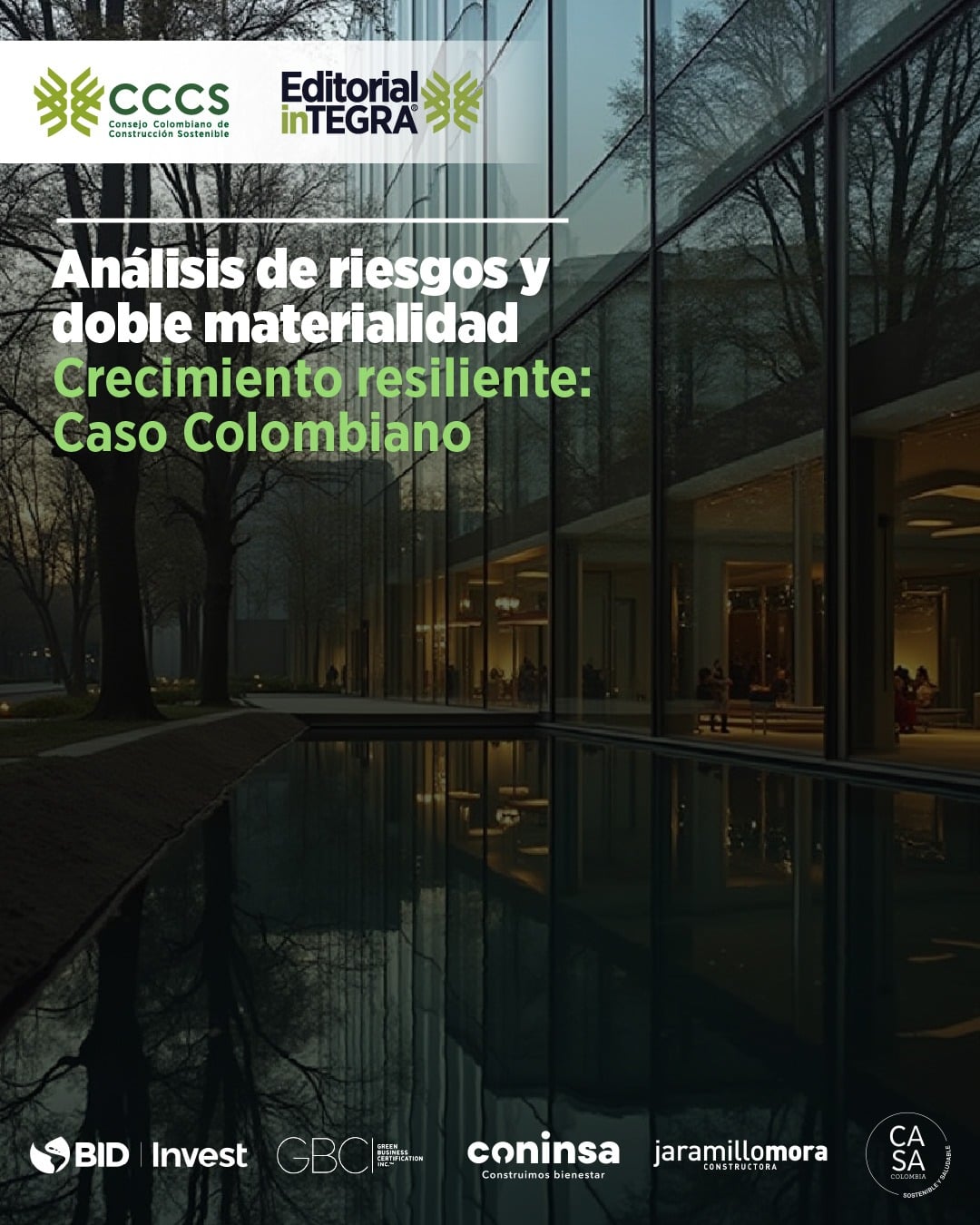
With this purpose, the Colombia Green Building Council (Colombia GBC), with the technical support of consulting firms Marsh and Myzelio and the backing ofIDB Invest and GBCI, developed a corporate risk analysis study based on a double-materiality perspective. This study identifies, prioritizes, and assesses the most relevant risks, opportunities, and impacts across the value chain and gave rise to the publication “Risk Analysis and Double Materiality – Resilient Growth: The Colombian Case,” designed to strengthen decision-making in Colombia’s sustainable construction sector, with potential for replication in other countries in the region.
The findings highlight nine material topics encompassing 29 risks, seven of which are considered critical, including low material traceability, exposure to extreme climate events, supply chain instability, and financial risks related to liquidity and project continuity. In contrast, 16 strategic opportunities were identified, linked to material circularity, decarbonization, innovation, and access to sustainable finance. The main conclusion is clear: structured risk management strengthens business resilience and enhances sector competitiveness.
One of the study’s most valuable contributions is the incorporation of the double-materiality approach, which simultaneously evaluates how environmental and social risks affect companies and how sector activities generate impacts on the environment and civil society. This approach-aligned with new international sustainability standards- provides organizations with verifiable, comparable, and practical metrics for engaging with financial institutions, investors, insurers, and strategic partners.
Although the study was conducted in Colombia, the methodology is fully replicable in other Latin American and Caribbean countries. Adapting it to local regulatory frameworks and market characteristics would enable a clearer understanding of the regional risk landscape and strengthen decision-making in markets facing shared challenges such as exposure to climate change, the need for resilient infrastructure, and the urgency of transitioning toward more sustainable development models.
Thus, effective risk management not only strengthens business resilience, but also reduces losses and operating costs, increases the durability and performance of assets, improves traceability and governance, and enhances organizations positioning with insurers, investors, and other stakeholders. These elements create better conditions for sustainable financing, enable the implementation of strategic actions for decision-making, increase adaptive capacity to emerging risks, and position companies in a context where sustainability is a decisive performance factor.
To move forward as a sector, it is essential to act first where risk is most critical; turn technical performance into verifiable evidence through environmental, social, and climate indicators; integrate resilience from the design stage; acknowledging that the cost of adaptation will always be lower than the cost of inaction; align corporate decisions with sustainable finance opportunities; and, strengthen collective action, recognizing that no single actor can face these challenges alone and that resilience is a collective achievement.